

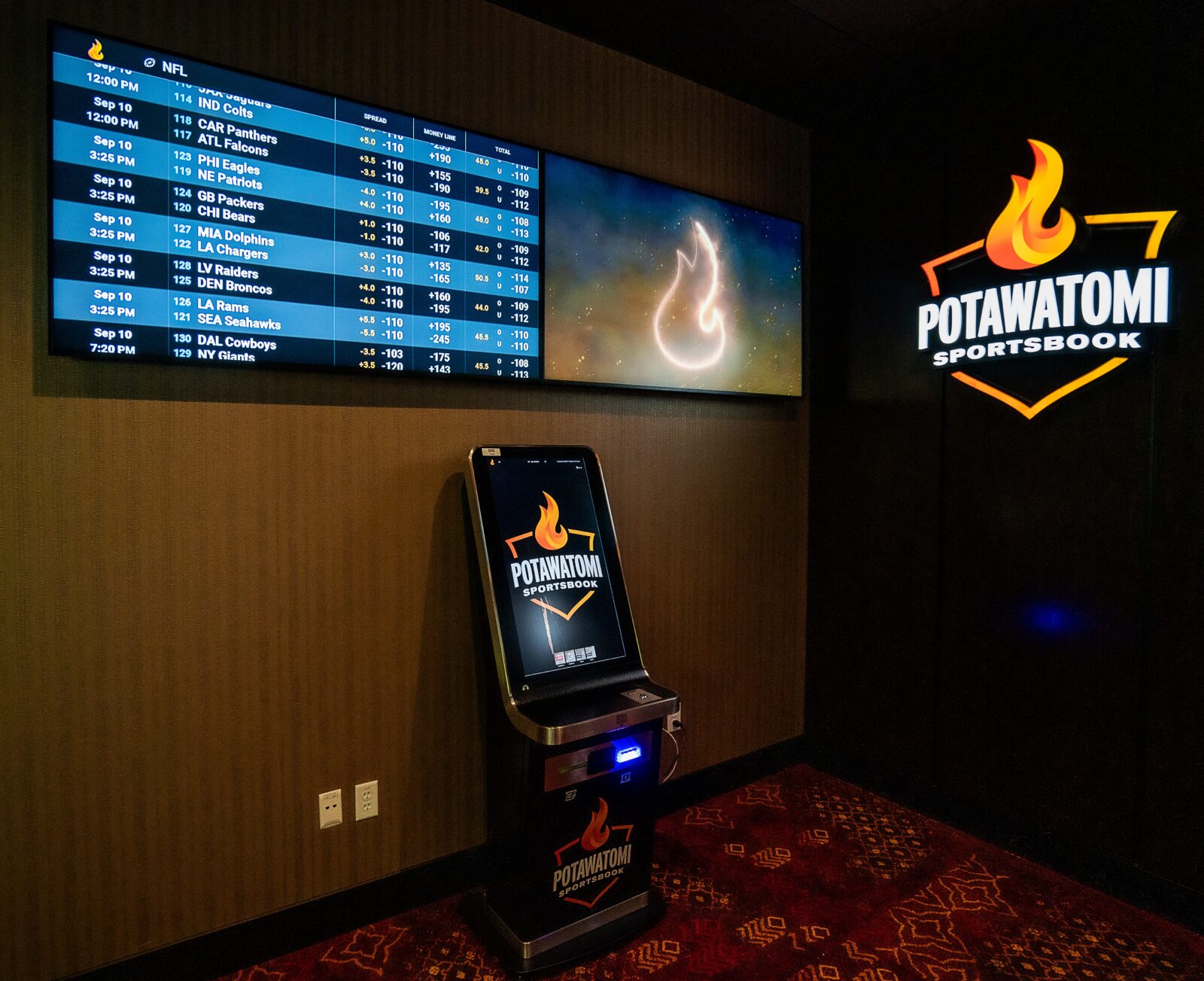
Every sports marketer works within rules. League clean zones, broadcast standards, category exclusivity in a sponsorship deal, the clearance call from a client’s legal team on a Thursday night.
Those rules are commercial. They come from contracts, and contracts can be renegotiated. Gambling advertising in North America runs on a different kind of rule, the kind written by a regulator, published as a numbered standard, and enforced with a fine. You do not negotiate those. You build the campaign around them, or you do not run it.
That distinction is the reason the casino category looks strange from the outside. A sportsbook can buy national inventory during an NFL window and be broadly on-message in most of the country. A casino product cannot, because the map underneath it is far smaller and the copy rules change at the border of each jurisdiction. Anyone selling media into this category, or planning a rights package that touches it, needs to know where a licensed online casino real money offer can legally be promoted and what the promotion is allowed to say once it gets there.
What follows is the practical shape of that, as of late August 2026, with the sharpest written rules coming from Canada rather than the United States.
Seven States Sell It, Forty-Three Don’t, and That Splits Every Media Plan
Legal real-money online casinos exist in seven US states: New Jersey, Pennsylvania, Michigan, West Virginia, Connecticut, Delaware and Rhode Island. New Jersey went first in November 2013, which means the oldest regulated US iCasino market is nearly thirteen years old. Maine legalized in 2026 but had not gone live by the end of August. That is the entire licensed footprint.
Compare that to online sports betting, which is available in roughly two-thirds of the country, and the media consequence is obvious. Sportsbook creative can run nationally with geo-suppression at the edges. Casino creative cannot, because in most of the map there is no product to sell and no license under which to sell it. So casino spend concentrates into state-level and DMA-level buys: Philadelphia, Detroit, the New Jersey side of the New York market, Providence. Regional sports networks, local radio, in-venue signage and addressable digital do the heavy lifting. National sports inventory mostly does not, unless the buy is brand-level and the offer is stripped out.
This is why casino brands show up as arena naming partners and team sponsors in a handful of markets and are invisible in the rest. It isn’t a strategy preference. It’s licensure.
Ontario Took Athletes Away, and That Was the Costliest Rule So Far
Ontario opened to private operators on April 4, 2022 and has become North America’s largest regulated online gambling market by wagering volume. In fiscal 2024-25, the province recorded C$82.7 billion wagered and C$3.2 billion in gaming revenue. The Alcohol and Gaming Commission of Ontario regulates it, iGaming Ontario conducts and manages it, and the minimum age is 19.
Then, on February 28, 2024, Ontario barred both active and retired athletes from appearing in gambling advertising. Not just current players. Retired ones too, which closed the obvious workaround before anyone could build a campaign on it. The narrow carve-out left in place is for messaging that exists purely to promote responsible gambling.
For a sports-marketing audience, that single rule is worth more attention than anything else in this article, because it removed the category’s most valuable creative asset in one of its biggest markets. The athlete endorsement is the default unit of sports marketing. It is how brands buy credibility quickly. Ontario decided credibility was precisely the problem, reasoning that a familiar player vouching for a betting product carries disproportionate weight with people who should not be targeted at all.
What replaced it has been less interesting and, by most accounts, less effective: generic talent, animation, mascots, product-feature spots, and heavier investment in the sponsorship assets that survive the rule, such as signage and category rights, where the brand is present but nobody is endorsing anything.
Alberta Wrote the Marketing Rules Before It Took a Single Bet
Alberta’s competitive online market launched on July 13, 2026 under the iGaming Alberta Act, with 22 platforms live on day one and more than 27 by mid-August. PlayAlberta, the government-run site, continues to operate alongside them. The minimum age is 18, a year lower than Ontario and British Columbia.
The interesting part is sequencing. Ontario opened first and tightened its advertising standards afterward, which meant operators built campaigns, hired talent and then watched some of that work become unusable. Alberta benefited from watching that happen. Its rules prohibit advertising directed at minors, the use of celebrities likely to appeal to minors, and the advertising of bonuses and inducements to a person who has not consented to receive them.
That third prohibition is the most commercially significant, and it gets less coverage than it deserves.
Pull the Offer Out of the Ad and the Budget Moves to Both Ends of the Funnel
The bonus offer has always been the acquisition engine of online gambling. Deposit match, free spins, bet insurance. It’s why a casino ad has a number in it. Take the number out of everything except opted-in channels and the media plan changes shape.
The top of the funnel survives because brand-building creative doesn’t need an offer. The bottom of the funnel survives too, and gets busier, because email, push, in-app messaging and CRM to consenting customers are exactly where the inducement is still permitted. What thins out is the middle: the performance-marketing tier that used to convert cold audiences with an offer in the ad unit itself. Affiliate copy, retargeting, paid social. That work does not disappear, but it becomes a two-step process: one asset to earn consent and another to make the offer, which lengthens the path and raises the cost of every acquisition.
Sponsorship gets more valuable in that world, not less. A jersey patch or a stadium naming deal was never going to carry a deposit-match offer anyway. It builds the recognition that makes the later, permitted, opted-in message land. In markets with consent-based inducement rules, brand assets do conversion work at a distance, and the attribution models most operators use are poorly built to see it.
British Columbia Is the Control Group
British Columbia never opened. Online gambling there runs through BCLC and PlayNow only, with a minimum age of 19, and there is no private competitor to advertise against. That absence is instructive: with a single operator, advertising becomes utility messaging rather than competitive persuasion. No acquisition arms race, no offer inflation, and no need for an athlete-endorsement rule because nobody is bidding for athletes.
| Market | Who can offer online casino | Minimum age | What the ad rules do |
|---|---|---|---|
| Ontario | Private operators, since April 4, 2022 | 19 | Athletes, active and retired, barred from gambling ads since February 28, 2024 |
| Alberta | Private operators plus PlayAlberta, since July 13, 2026 | 18 | No ads aimed at minors, no youth-appealing celebrities, no bonus messaging without consent |
| British Columbia | BCLC and PlayNow only | 19 | Single operator, so no competitive advertising market |
| NJ, PA, MI, WV, CT, DE, RI | Licensed private operators | 21 in each | State regulator approves ad content separately in every market |
| Remaining 43 US states | No licensed real-money online casino | n/a | No lawful product to advertise |
Read down that table, and you can see why a single North American casino campaign is really five campaigns with shared art direction.
The Sweepstakes Fight Is Now About Who Else Gets Sued
In the forty-three states with no licensed online casino, sweepstakes casinos have filled the gap, and they advertise hard, including in sports media. The model uses two currencies: Gold Coins, which have no cash value, and Sweeps Coins, which operators say can be redeemed for roughly a dollar each once players meet playthrough requirements. An alternative method of entry, usually a mail-in request or a daily free claim, is legally required, and operators point to it as the basis for their position that no stake is placed. That is the operators’ framing of the model, not a settled legal finding, and regulators in several states have rejected it.
Through 2025 and 2026, the enforcement pressure widened. California’s AB 831 was signed on October 11, 2025 and took effect on January 1, 2026, extending liability beyond operators to vendors, which, on a plain reading, can reach the people who supply, promote and process for these brands. In August 2026, Florida’s Attorney General sued sweepstakes operators and payment processors. Connecticut, New Jersey and Montana have also acted. Legality varies by state and remains genuinely contested.
For anyone selling media, running an affiliate program or brokering a sponsorship, that is the line to watch. The old assumption was that legal exposure sat with the operator and everyone downstream was just a supplier. Vendor-liability provisions and processor lawsuits chip away at that assumption. If you are taking sweepstakes money into a sports property, the diligence question is no longer only whether the brand can advertise in a given state. It’s whether you can.
The Compliance Check Belongs in the Brief, Not the Sign-Off
Teams that handle this badly treat legal review as the last gate before release. Teams that handle it well put the constraint in the brief. The difference shows up in wasted production budget: a spot built around a retired player and then shown to counsel can’t run in Ontario, and reshooting is expensive.
In practice, that means a few unglamorous habits. Write the creative constraint into the brief with the jurisdiction named. Build asset variants from the start rather than editing a national cut down. Keep a live record of which markets permit inducement messaging in which channels. Treat affiliate and influencer copy as the operator’s liability, because regulators generally do. And track rule changes at the source, through regulator bulletins and trade coverage such as PlayUSA on Facebook, rather than finding out from a client’s compliance officer after the media is booked.
None of this is creative work. All of it determines whether the creative work survives.
Regulation Decides Whether You Get Paid, Not Whether You Win
One honest note, since this category is easy to write about as though licensing solves everything. It doesn’t. The house edge is built into every one of these products, licensed or not. Regulation governs whether the operator holds your funds properly, honors a withdrawal, verifies age, and tells the truth in its advertising. It does not change the maths of the game, and no advertising standard was ever designed to.
That’s worth stating plainly in an industry whose marketing exists to make the maths feel less relevant. Support lines are region-specific: ConnexOntario is 1-866-531-2600, Alberta Health Services runs 1-866-332-2322, British Columbia uses 1-888-795-6111, and the US line is 1-800-GAMBLER.
What to Decide Before Your Next Buy
If you sell inventory, represent a property, or plan to spend that touches this category, the decision in front of you isn’t whether gambling money is worth taking. Most of the sports industry answered that years ago. It’s narrower than that, and it has a deadline.
Alberta’s rules are six weeks old and untested in enforcement. Ontario’s athlete ban is two and a half years old and has already reshaped what talent deals in that province can look like. The sweepstakes question is being litigated in Florida right now and legislated in California. Any package you sign this autumn for a 2027 season will run through at least one of those outcomes.
So: does your contract say what happens if the creative you approved becomes unlawful in one market halfway through the term, and does anyone on your side actually own that risk? Answer that before you agree to the rate card, because after the fact it becomes someone else’s problem, and in this category it usually becomes yours.
Figures and regulatory details are current as of August 28, 2026.






Leave a comment