

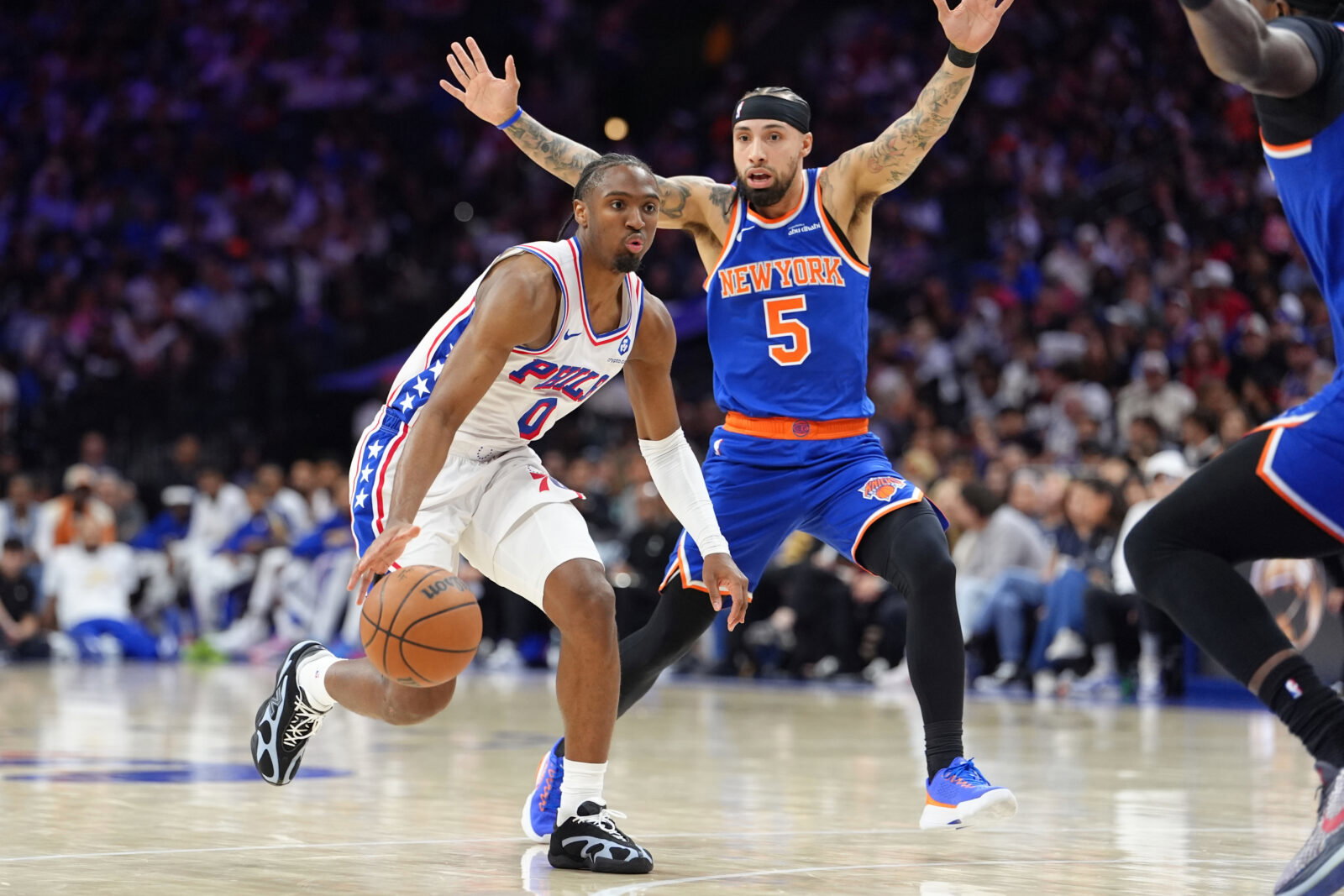
The Sixers came out flying during Game 3 on Friday night. Paul George looked aggressive from the opening possession, Joel Embiid was creating offense despite clearly not being fully healthy, and Tyrese Maxey finally had a crowd behind him that sounded alive.
After two games in New York where the series already felt like it was slipping away, the Sixers finally looked like a team ready to punch back.
Then the Knicks took over.
The game slowed down. The offensive rhythm disappeared. Missed rebounds turned into second-chance points. The Sixers’ bench gave the team almost nothing. By the fourth quarter, the building sounded defeated again as Philadelphia fell 108-94 and moved closer to elimination.
Game 4 Sunday night became all but a formality. The Knicks burst out of the gate and slammed the door shut on any Sixers comeback. The damage had been done in Game 3.
The frustrating part is that none of this felt sudden; it felt familiar.
Paul George Looked Unstoppable, Until He Didn’t
George was exactly what the Sixers needed in the first quarter of Game 3. He scored 15 early points, hit three threes, and gave Philadelphia the kind of shot-making that can completely swing a playoff game. Every jumper seemed to wake the crowd up more. For a little while, the Sixers actually looked dangerous.
Then the shots stopped falling. George went scoreless for the rest of the night, missing all nine of his attempts after the first quarter. That stretch perfectly summed up this entire series for Philadelphia.
The flashes are there but the consistency is not. One good run turns into five empty possessions. One momentum swing gets erased by a rebounding breakdown or defensive mistake. The Sixers keep looking like they are about to take control before everything stalls out again.
Meanwhile, the Knicks never really panic.
The Knicks Keep Winning the Ugly Parts of the Game
This series was not decided by stars. It was decided by everything underneath them. The Knicks continued to win the hustle plays, the bench minutes, and the rebounds that slowly wear teams down over four quarters.
At halftime of Game 3, New York held a 16-0 advantage in bench scoring. Former Sixer Landry Shamet gave the Knicks meaningful minutes off the bench while Philadelphia struggled to get reliable production outside its starters. That gap matters even more because the Sixers’ stars already look exhausted.
Embiid returned after missing Game 2 with ankle and hip injuries, but he clearly was not moving at full strength. There were moments where he still looked dominant, but there were just as many where the physical toll was impossible to ignore.
Maxey is dealing with a different kind of exhaustion. The workload on him has been relentless dating back to the Boston series. Every possession feels like it depends on him creating something, and by the second half Friday night, the fatigue started showing again.
The Knicks simply had more answers. The Sixers had to play nearly perfect basketball just to stay close.
Every Time the Sixers Build Hope, Something Falls Apart
That was probably the most frustrating thing about this series if you are Philadelphia.
The Sixers had stretches in every game, except Game 4, where they looked capable of winning. They opened Game 3 on a 9-0 run. They cut the lead to two late in the third quarter. The opportunities were there, they just never lasted long enough.
As soon as momentum was building, something would break down. A missed box out. A stagnant offensive stretch. A cold shooting run. The Knicks responded almost immediately every single time.
That is what separates these teams right now. New York looks steady, the Sixers look fragile.
Game 4 Felt Bigger Than Just One Last Hurrah
By the end, the conversation was not really about winning four straight games. Nobody in NBA history has ever come back from a 3-0 deficit, and nothing about this series suggested the Sixers were about to become the first.
Game 4 was more about pride, fight, and whether the Sixers could put together one complete performance instead of another collection of short-lived runs. Unfortunately, the team was embarrassed from the jump, and the swarm of Knicks fans that had made the trek to Philadelphia for the game made their presence felt.
The Knicks controlled the things that usually decide playoff series: depth, rebounding, defensive consistency, and late-game execution. That is why this series felt so much bigger than a few bad nights. The Sixers had stars, but the Knicks were the better team.











Leave a comment