

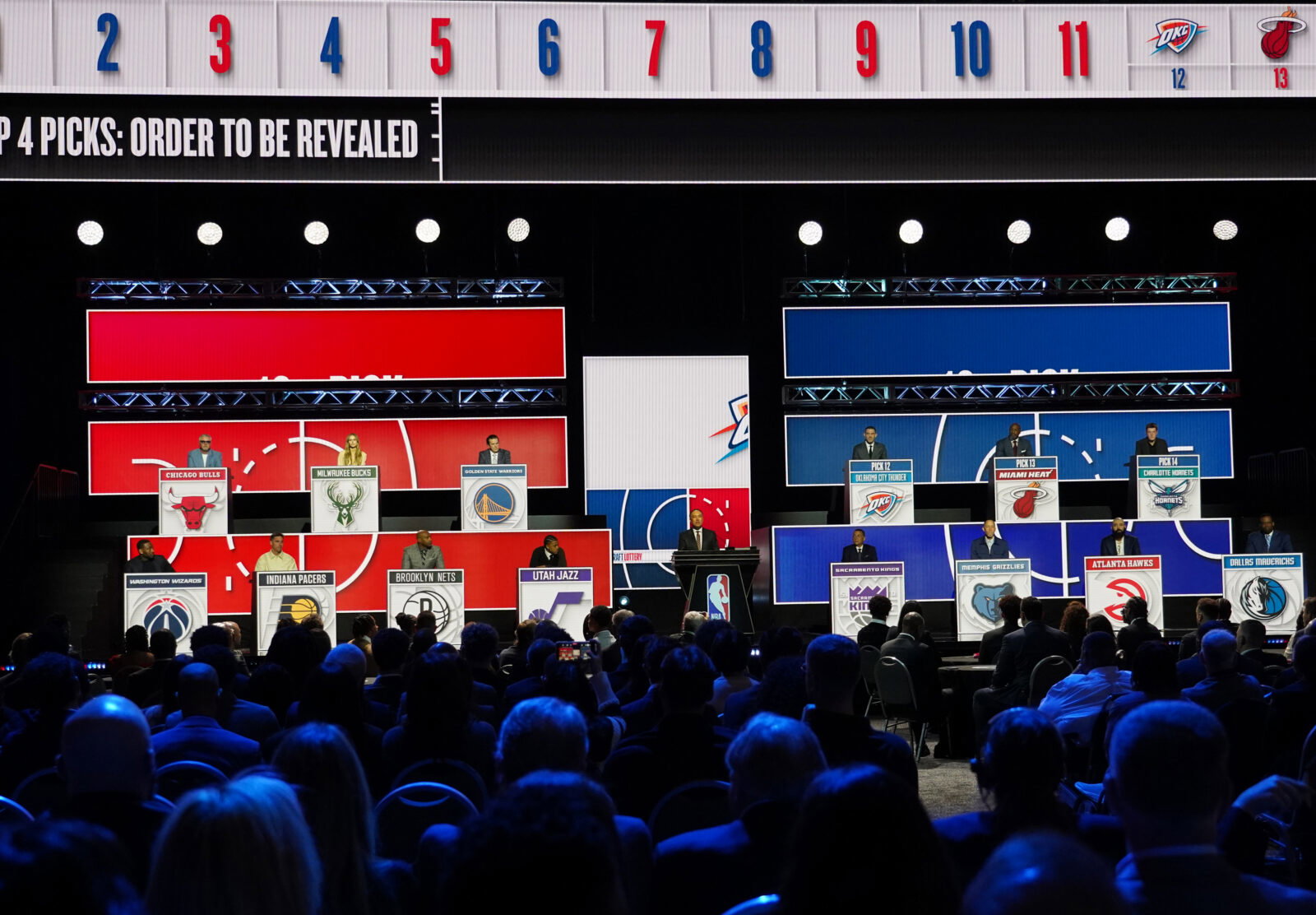
NBA commissioner Adam Silver has been outspoken about his desire to change the NBA Draft lottery system to eliminate tanking.
That vision quickly became a reality on May 28, when the league began a full rollout of the new “3-2-1” lottery system. It was approved by the NBA Board of Governors, who gave a sweeping 29-1 vote that will change the league’s recruitment system for years to come.
New Ping Pong Balls
Under the revamped system, the lottery will expand from 14 to 16 teams while significantly changing teams’ selection odds. However, that’s just the start of the changes. Perhaps the most controversial aspect of the new format comes in the form of adjusted lottery odds and draft relegation.
Teams participating in the lottery will receive three, two, or one lottery ball for the drawing, depending on their final standings. The ninth and tenth Play-In seeds in each conference will receive two chances, whereas the seventh and eighth seeds will have one. All remaining teams that do not qualify for the NBA Playoffs or Play-In Tournament will receive three.
The real shakeup, however, begins when the league’s worst three teams enter the equation. Rather than keeping the same number of lottery balls as the rest of the non-playoff squads, the bottom organizations will be limited to just two. Thus, those with the league’s worst records are now penalized for extended periods of losing. The league says the change provides “an increased incentive to win.”
There is an additional caveat to the new development. These draft-relegated teams, despite losing their odds at a top selection, will have a set pick floor at pick 12. Other teams, meanwhile, could see their selection fall as far as pick 16.
Additional Pick Restrictions
In addition to the new incentive, teams will also be expected to work with other draft changes.
No organization can pick first overall in two or more consecutive drafts. Similarly, teams can no longer hold a top-five selection in three consecutive years. These conditions will only apply to picks that a team originally owned, no matter if they have traded them away or not. Lastly, Franchises can no longer attach top-12 through top-15 protections on freshly traded picks.
The league will not know whether these changes accomplish their goal until 2027 at the earliest. What is certain, however, is that the new lottery format has the potential to forever change how franchises approach constructing their teams.
Why Make the Change?
The lottery overhaul did not come out of nowhere. In recent years, some franchises have been able to hyper-accelerate their rebuilds through repeated top selections, with the San Antonio Spurs serving as a clear example.
Across the 2023, 2024, and 2025 drafts, San Antonio received the first, fourth, and second overall picks. Eventually, those selections would result in Victor Wembanyama, Stephon Castle, and Dylan Harper. Just a year after that final pick, the Spurs find themselves in the NBA Finals.
This is precisely the type of outcome the league appears to want to make less common moving forward. And although the changes are primarily geared towards future drafts, consequences are already building for one franchise: the Memphis Grizzlies.
The Grizzlies Lose Value
In February, the Grizzlies traded away forward Jaren Jackson Jr. to the Utah Jazz in a blockbuster eight-team trade. In exchange, they received a handful of players in addition to a set of 2027 first-round picks. One of them came from the Los Angeles Lakers, while the other came from the Jazz.
The issue? Utah had selected in the top five in both 2025 and 2026, meaning that, under the new rule, they could not select that high again in 2027. Thus, Memphis effectively lost one of, if not the most, valuable means of compensation for their former star. Many fans of the Grizzlies, as a result, are not happy about the change.
This isn’t just a problem for the modern NBA, either.
In 2029, the Houston Rockets own the rights to the Phoenix Suns’ unprotected first-round pick that came from the trade for Kevin Durant. This year, the Suns entered the playoffs as a Play-In team, giving them a strong possibility for a top-five pick in next year’s draft. If this pattern were to continue for the next two seasons, Houston’s 2029 selection from the Suns would be barred from being in the top five.
For critics, that’s where the league’s anti-tanking plan becomes most problematic. While the changes do harm the struggling team’s chances of chasing lottery odds, they also impact other franchises’ current and potential future draft assets. So, while the NBA may have alleviated itself of team pressure for now, there is a high likelihood it will resume in the future.
Future League Outlook
Luckily for those being affected by these changes, the NBA’s new rules will only (currently) apply to the 2027, 2028, and 2029 drafts. Once the league reaches the 2030 mark, its Board of Governors will vote on whether or not reform is necessary. Until then, however, some teams will likely be hesitant to deal their picks until there is continuity within the system.
As of now, the NBA’s message is crystal clear: lose on purpose, and you’ll lose your chances at top-shelf talent. Yet, the true challenge for the league may not end in preventing tanking. It may be ensuring that, in the process of altering the NBA Draft’s DNA, it doesn’t make the path back to contention even more difficult.











Leave a comment