

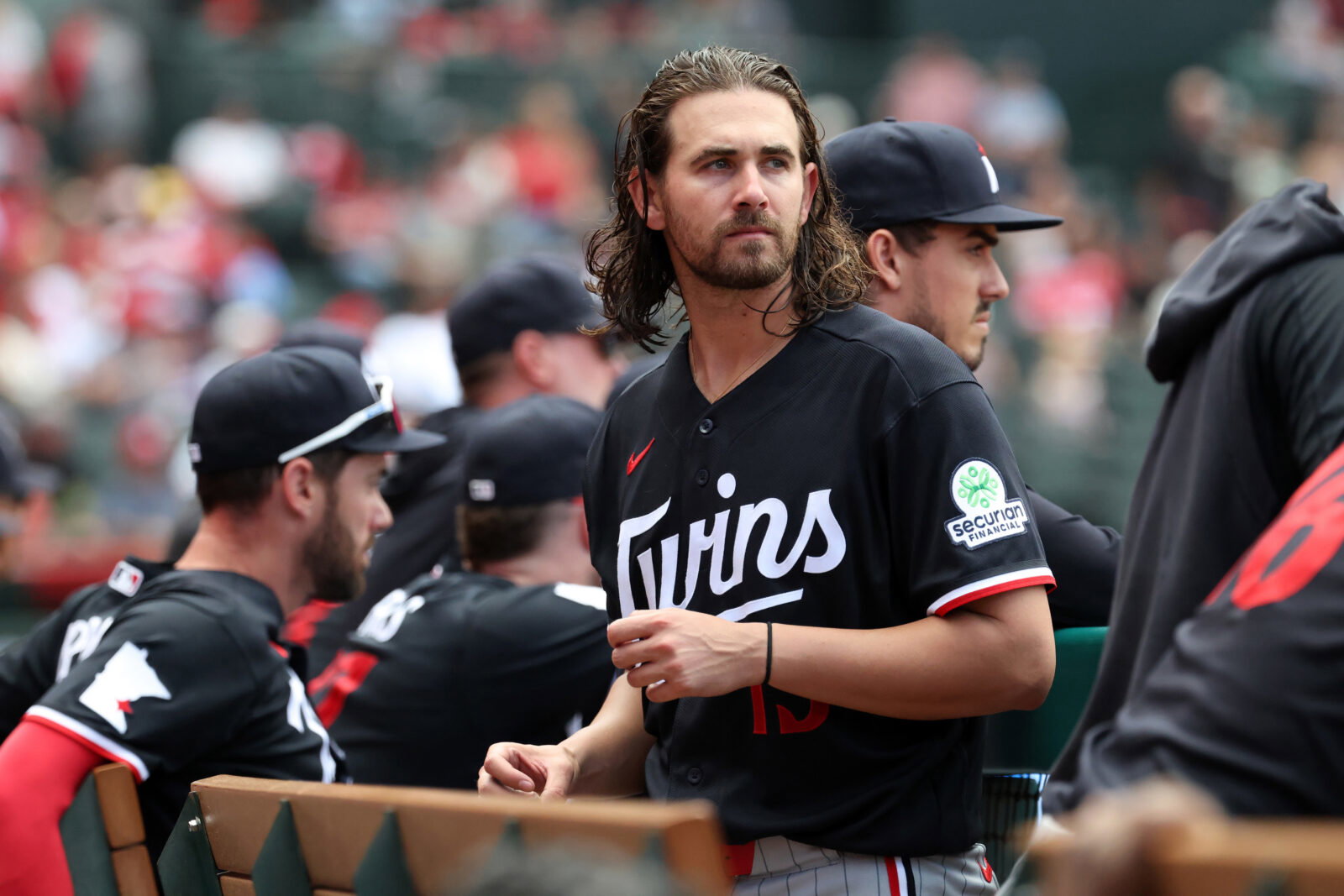
The Minnesota Twins entered the Aug. 3 trade deadline at 56-57, just one game out of the final American League wild-card spot. With the postseason within reach, the Twins added pitchers A.J. Minter, Jeff Hoffman and Dean Kremer in an effort to strengthen their pitching staff and make a playoff push.
Instead, Minnesota went in the opposite direction.
Since the trade deadline, the Twins are 17-26, a stretch that ended their playoff hopes. The Twins’ struggles, however, do not stem from the players they acquired at the trade deadline.
Minter and Hoffman have provided effective innings out of the bullpen, while Kremer has delivered some quality starts since joining the Twins. Instead, a combination of injuries, inconsistent bullpen performance and an offense that has struggled to produce contributed to Minnesota’s disappointing finish.
Key Injuries for the Twins
Joe Ryan
The injury bug hit Minnesota shortly after the trade deadline. On Aug. 7, just days after the deadline, All-Star pitcher Joe Ryan was placed on the injured list with a glute strain. He missed a month before returning Sept. 7. Ryan’s absence was a significant blow to the starting rotation, which had to turn to inexperienced pitchers such as Zebby Matthews and Connor Prielipp.
Since returning, Ryan has struggled to regain his previous form. He has lost two of his three starts since his return, while pitching just 13 innings combined. During those three outings, Ryan has allowed eight earned runs and four home runs.
Byron Buxton
Another major injury that plagued the Twins was that of All-Star center fielder Byron Buxton. Buxton dealt with a nagging hip injury throughout August, and his numbers during the month reflected his struggles. He went 7-for-39 with no home runs and one RBI during that stretch.
On Sept. 11, it was announced that Buxton would undergo season-ending hip surgery.
Before the injury and the slump that followed, Buxton was playing at an All-Star level. At the All-Star break in July, Buxton had 25 home runs and a batting average above .280. He was having one of the best seasons of his career and had even entered MVP conversations.
Buxton’s injury was a significant blow to the Twins, both on the field and in the clubhouse. As one of the team’s veteran leaders, his absence left a noticeable void for a team dealing with multiple injuries down the stretch.
Trevor Larnach
Trevor Larnach was having one of the best seasons of his career before being placed on the injured list Sept. 15 with a wrist sprain, ending his season. Larnach was batting .269 with a .352 on-base percentage and a .788 OPS, all career highs. His biggest contribution to the Twins was his consistent bat, something the team had lacked for much of the season.
While Larnach’s injury came late and did not contribute to the Twins’ struggles in August and early September, the team was still in contention for a playoff spot when he went down. His absence further weakened an already depleted lineup and made the Twins’ path to the postseason even more difficult.
Inconsistent Bullpen and Bats
The Twins’ Bullpen
While injuries have hampered the Twins’ starting rotation during the second half, the bullpen has struggled all season, squandering several games in which the starters had put the team in position to win.
Some of the new additions to the bullpen at the trade deadline have performed well, but several relievers already in the organization have struggled. The Twins rank 26th in MLB in bullpen ERA, and A.J. Minter is the only reliever on the team with an ERA below 3.00. However, Minter has only pitched 19 innings for the Twins.
Relievers Taylor Rogers, Yoendrys Gómez, Travis Adams and Andrew Morris all have ERAs above 4.00. Rogers, Gómez and Adams all have ERAs above 4.40, adding to the bullpen’s struggles during the Twins’ late-season push.
Gómez looked promising as Minnesota’s closer at the start of the season. By the end of July, he had a solid 3.26 ERA with 14 saves. That changed in August, when he posted a 6.48 ERA. His struggles have continued into September, where he has a 9.00 ERA through six innings.
Batting Struggles
While the Twins’ offense ranks around the middle of the MLB pack for the season, it has been inconsistent in recent weeks. Since the trade deadline, the Twins have scored at least five runs in just 14 of 43 games. They have scored three runs or fewer 20 times during that span and lost 18 of those games.
Their offensive struggles have continued into September. The Twins are batting .233 with a .296 on-base percentage this month, both their lowest marks of the season.
The pitching staff has had its own struggles, but it’s difficult to consistently win when your offense is scoring three runs or fewer.
Twins Young Core
With injuries and inconsistent play on both sides of the ball, the Twins have had plenty of opportunities to give young players from their farm system a chance at the major league level.
Kaelen Culpepper
The first prospect they called up was shortstop Kaelen Culpepper, who is ranked 31st among all MLB prospects. The 23-year-old shortstop was called up Aug. 7 and has hit .275 with 11 RBIs since joining the Twins. He also has shown flashes defensively, with his athleticism and strong arm standing out at shortstop.
Ryan Kreidler and Tristan Gray handled the majority of the Twins’ shortstop duties before Culpepper’s arrival, but both struggled in different areas. Gray has a -4 fielding value at the position, while Kreidler has a positive fielding value but a -5 batting value.
Culpepper’s arrival has allowed the Twins to keep Brooks Lee at third base and give Royce Lewis more opportunities at first base without sacrificing production at shortstop.
Walker Jenkins
The Twins called up center fielder Walker Jenkins, the next member of their young core, on Aug. 28. Jenkins, the organization’s No. 1 prospect and No. 13 prospect in all of baseball, joined the team shortly after Byron Buxton landed on the injured list.
With both of the Twins’ primary center fielders, Buxton and Austin Martin, out of the lineup, Jenkins was thrust into an important role. He got off to a slow start, batting .089 with a .212 on-base percentage over his first 15 games.
Jenkins has since shown signs of breaking out, recording 10 hits and two home runs over his last five games. The recent stretch provides an early glimpse of his potential at the major league level, and continued opportunities could give him a chance to establish himself in the Twins’ lineup.
Emmanuel Rodriguez
The last prospect to show promise since being called up is center fielder Emmanuel Rodriguez. The 23-year-old was promoted Sept. 12 and made an immediate impact, hitting a home run in his first major league at-bat. He recorded a hit in each of his first four games before going hitless in his next four.
While Rodriguez’s bat has cooled, he has remained effective defensively. He has played both center and left field without committing an error, making every defensive play at both positions. Rodriguez’s strong start has given the Twins another young option in the outfield as they navigate injuries and inconsistent production throughout the lineup.
Looking at 2027
With the Twins officially eliminated from playoff contention in 2026, the focus now shifts to 2027. That makes the final weeks of the season important for the team’s young players.
The Twins should use this time to give their prospects as many major league reps as possible. Several players could leave in the offseason as their contracts expire. That could lead to major changes on next season’s roster.
Giving young players experience now will help the Twins evaluate which players can become part of the team’s future. Culpepper, Jenkins and Rodriguez have each shown flashes in the majors. More playing time will give the Twins a better look at what they can bring in 2027.
![May 13, 2026; Denver, Colorado, USA; Colorado Avalanche center Nathan MacKinnon (29) celebrates his goal with center Martin Necas (88) and center Brock Nelson (11) and ]center Nazem Kadri (91) and defenseman Brent Burns (84) in the third period against the Minnesota Wild in game five of the second round of the 2026 Stanely Cup Playoffs at Ball Arena. Mandatory Credit: Isaiah J. Downing-Imagn Images](https://theleadsm.com/wp-content/uploads/2026/09/2026-05-14T031004Z_351474971_MT1USATODAY28948903_RTRMADP_3_NHL-STANLEY-CUP-PLAYOFFS-MINNESOTA-WILD-AT-COLORADO-AVALANCHE-150x150.jpg)


![May 13, 2026; Denver, Colorado, USA; Colorado Avalanche center Nathan MacKinnon (29) celebrates his goal with center Martin Necas (88) and center Brock Nelson (11) and ]center Nazem Kadri (91) and defenseman Brent Burns (84) in the third period against the Minnesota Wild in game five of the second round of the 2026 Stanely Cup Playoffs at Ball Arena. Mandatory Credit: Isaiah J. Downing-Imagn Images](https://theleadsm.com/wp-content/uploads/2026/09/2026-05-14T031004Z_351474971_MT1USATODAY28948903_RTRMADP_3_NHL-STANLEY-CUP-PLAYOFFS-MINNESOTA-WILD-AT-COLORADO-AVALANCHE-680x453.jpg)







Leave a comment