

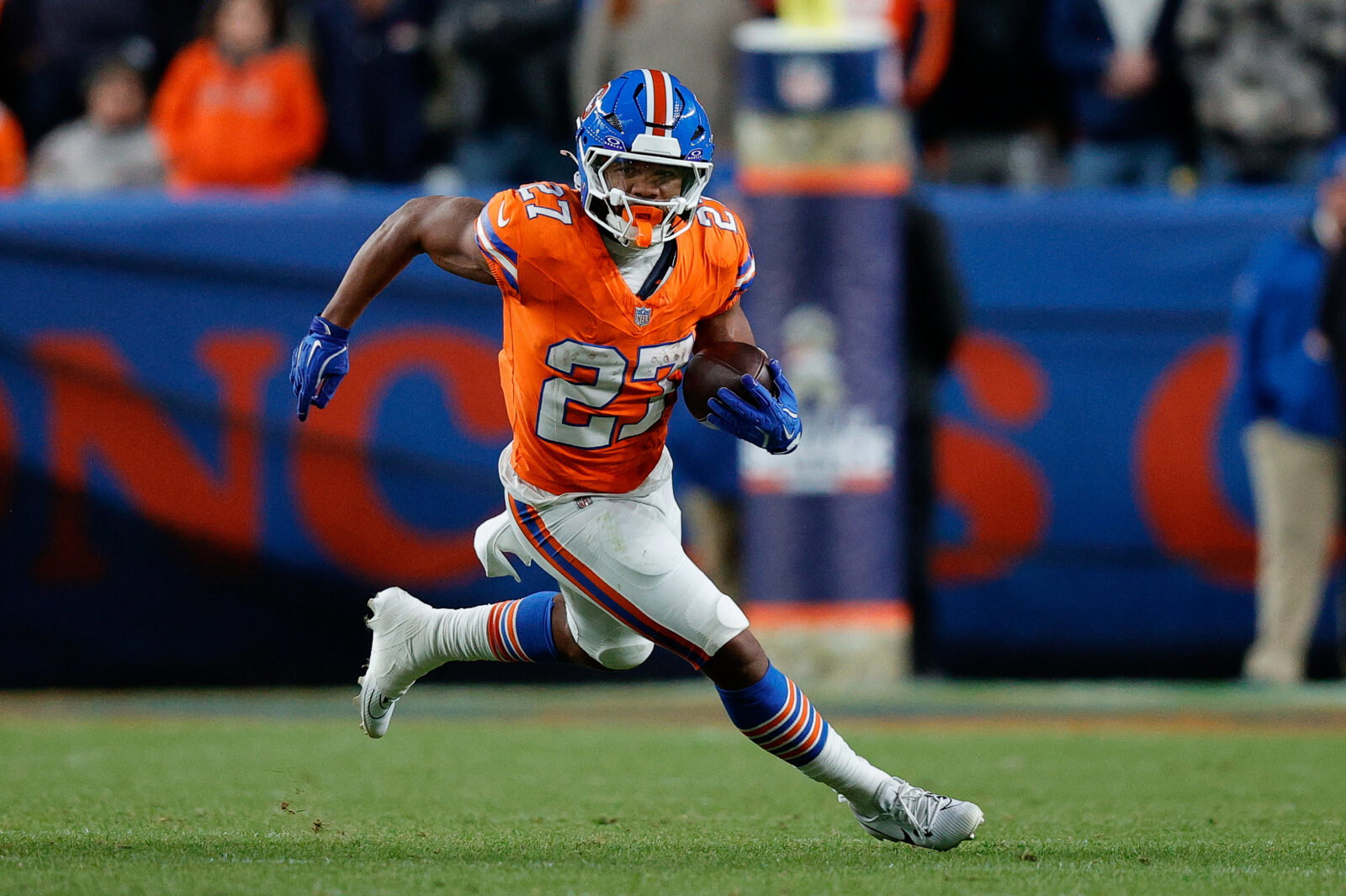
The Denver Broncos are entering the 2026 season as true contenders. After a dominant 14-3 season and an AFC Championship appearance last year, they are ready to make another run. However, last season did end with one question: What will the running game look like?
Starter J.K. Dobbins suffered a season-ending injury in Week 10 while on an expiring contract. RJ Harvey, the rookie, showed plenty of promise, but could not produce as the clear RB1.
However, now, with the addition of another rookie, the Broncos have a scary rushing attack that could pose all sorts of problems for defenses.
J.K. Dobbins as Primary Back
J.K. Dobbins’ entire career can be categorized by the word “frustrating.” He has always been a talented back, posting solid numbers and averages while providing burst on the outside and strength between the tackles. But he can never stay healthy.
In his six-year career, he has only played over 13 games once. He has never posted a 1,000-yard season, but he was on pace for one in three of his six seasons before injury.
So, after being top-five in the NFL in rushing yards when he went down, fans were not surprised. They were merely frustrated. When the season ended, Broncos Country wasn’t sure whether they wanted him back. Ultimately, talent won out as the Broncos signed him to a new two-year deal. He fit very well in the system, and he did everything that coach Sean Payton could ask for.
Dobbins will undoubtedly have another solid year. With last year being one of, if not his best, seasons, a regression seems unlikely. Having a first- and second-down rusher with great size and speed that can consistently fight for extra yardage is crucial.
Now, Broncos fans would have a right to be skeptical if he were the only back that the team was relying on. However, given the support they have around Dobbins, fans have nothing to fear.
RJ Harvey as a Third-Down Back
Unlike Dobbins, RJ Harvey isn’t yet able to handle heavy rushing workloads and pick up steady yardage on inside handoffs. At 5-foot-8, 205 pounds, he isn’t built for that type of running style. However, with his home-run threat and passing-game prowess, Harvey was, and will continue to be, the perfect complement to Dobbins.
Even in the RB1 role when Dobbins was sidelined, Harvey struggled. He finished with 50 yards or less in seven of Denver’s nine games without Dobbins. But Harvey has Dobbins beat in the long-play game. With a 50-yard run against the Titans and a 40- and 38-yard touchdown against the Cowboys and Jaguars, respectively, he has the kind of burst that cannot be taught. So, while the Broncos will continue to use Dobbins heavily on first and second down, they will also likely keep sprinkling in Harvey for his open-field formidability.
Harvey also thrives as a pass catcher; he finished fifth in receiving yards for Denver. He showed off his skill set in the playoffs against the Bills, accumulating five catches for 46 yards. His 24-yard catch-and-run in overtime helped the Broncos put the game on ice. Simply put, when Harvey gets the ball in space, he can break down defenses and make monster plays.
Not to mention, last year was only his rookie season. Chances are he will only keep getting better. He may learn from Dobbins and eventually develop into a workhorse back. He may improve his pass protection and hands, which would allow him to get even more reps.
Harvey’s skills already perfectly make up for what Dobbins lacks. His youth and potential also make up for Dobbins’ injury-riddled past. The two are a match made in heaven, but there’s still one more piece to the puzzle.
Jonah Coleman as Goal Line Back
Dobbins and Harvey were a great duo for the Broncos. Jaleel McLaughlin, whom they brought back, also had his moments. The one quality, though, that all these backs lacked was consistent goal-line production. Harvey’s undersized stature has already been established. Meanwhile, McLaughlin is even smaller. Admittedly, Dobbins is 5-foot-10, but he’s only 212 pounds. Great size for what he does, but ideally, a goal line back is even bigger.
In terms of rushing touchdowns, the top three and five of the top seven were over 220 pounds. Additionally, in short-yardage situations (downs where 1-3 yards were needed), Dobbins ranked only 22nd while Harvey was 43rd. Granted, Dobbins’ numbers might have been higher had he not gotten injured, but health is never guaranteed with him. Additionally, Harvey admittedly recorded a solid seven rushing touchdowns last season, but his efficiency was evidently subpar.
Now, at 5-foot-9 and 228 pounds, enter Washington rookie and fourth-round pick Jonah Coleman. Coleman finished second in the Big Ten with 15 rushing touchdowns, using his strength to muscle past defenders. Many rave about his goal-line production, with The Athletic mentioning that 24 of his 25 touchdowns came from inside the 20. Denver will want to keep all their backs fresh, so look for Coleman to get plenty of goal-line and short-yardage opportunities.
Additionally, though stats on it are hard to find, many in the draft process considered Coleman an elite pass blocker. With his size and determination, he can make the lives of pass rushers very difficult. Denver enjoyed using Harvey on third down due to his pass catching, but his frame made him a weak pass blocker. With Dobbins dominating first and second-down carries, pass blocking reps on third down could be another way Coleman could work into the offense.
Putting All the Backs Together
The Broncos’ backfield situation is overall very favorable. They have three talented backs with plenty of potential and a wide range of skill sets. Initially, the split will likely feature Dobbins getting reps on early downs, Harvey getting work on third, and Coleman being used when Denver needs a yard or two. However, there is still plenty of room for parity.
If Coleman or Harvey begin to develop nicely and thrive, they could eat into some of Dobbins’ work. Contrarily, if Harvey or Coleman falter, Dobbins is no liability in the air or near the goal line.
Realistically, Dobbins’ job should be safe. The most up-for-grabs role is Harvey’s, as with Coleman’s pass-catching and pass-blocking ability, he could take a chunk. Then, if Denver loses Dobbins to injury, which is always possible, they do not need to hit the panic button. Instead of Harvey inheriting the entire role, he can split the load with Coleman, combining his open-field explosiveness with Coleman’s steadiness and power.
All in all, Payton and offensive coordinator Davis Webb have many toys to play with. Not to mention the slew of dangerous receivers they will have to figure out. Only time will tell exactly how the Broncos will use their backs, but with their versatility, speed, size, and production, Denver’s backfield could propel them right back to the playoffs.










Leave a comment