

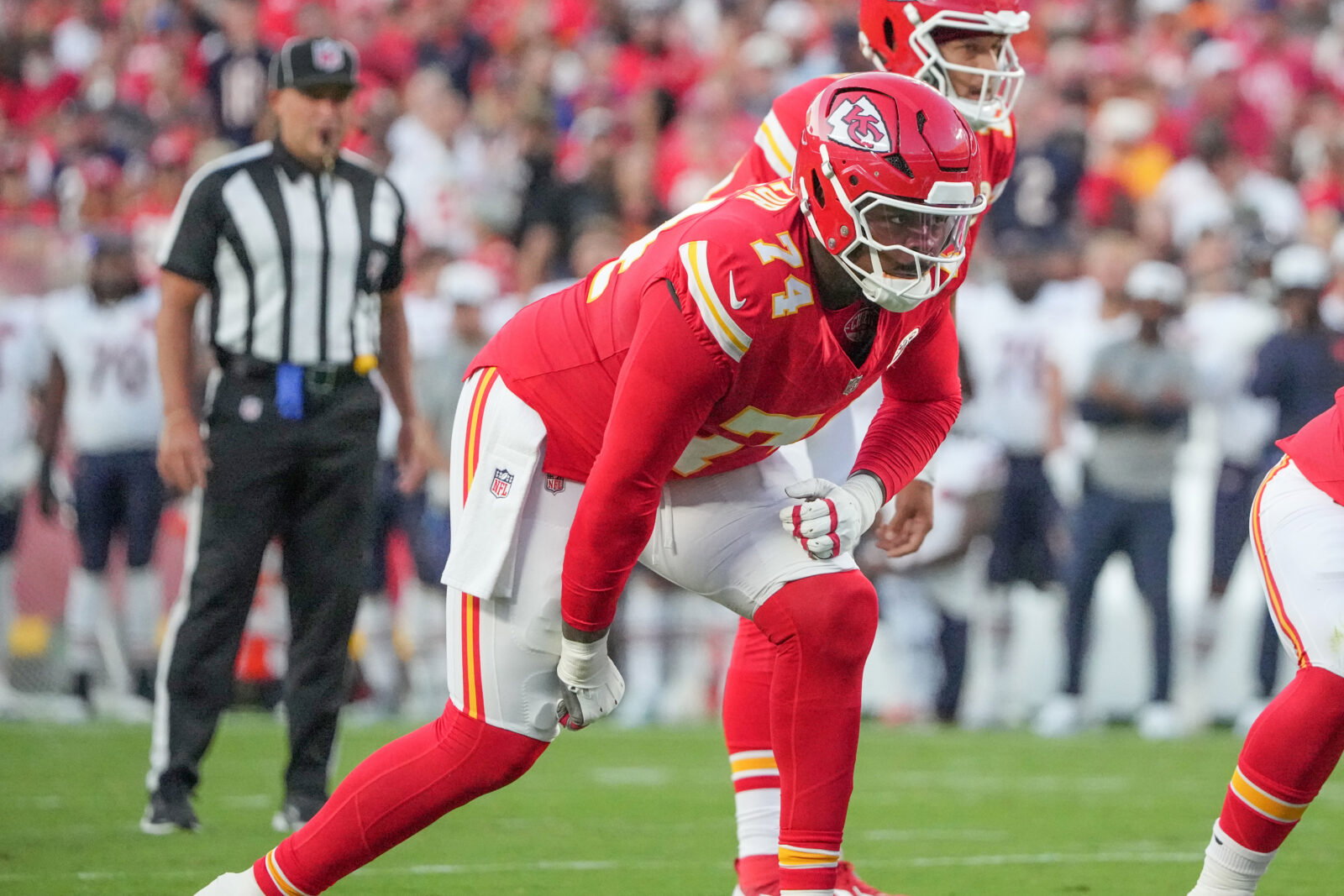
The Kansas City Chiefs’ decision to move on from offensive tackle Jawaan Taylor has sparked a lot of discussion among NFL fans and analysts.
Taylor was part of the team that helped protect quarterback Patrick Mahomes throughout their recent championship runs. The move underscores how quickly priorities can shift in the NFL, especially for teams trying to stay competitive while navigating salary-cap constraints.
For the Chiefs, it was not a matter of one thing but a combination of performance concerns, financial considerations, and the team’s long-term strategy.
Let’s dive in.
Initial Reaction to Cutting Jawaan Taylor
The news of Taylor’s release sparked many conversations, some of which are still ongoing today. Many believed the move was the right one, while others think Taylor returning on a cheaper deal would be a good thing.
These discussions often spill over into the world of online sports betting, where roster changes may affect odds and predictions for future games. Bettors often look at transactions like this to assess the potential of a team’s offensive line over the coming campaign.
While the seven-year veteran’s departure signals a significant change in the trenches, the Chiefs have always been able to retool key positions while remaining one of the most competitive franchises in the NFL.
Penalty-Prone Concerns
One of the biggest issues for Taylor during his tenure in Kansas City was his tendency to commit penalties. Offensive linemen are often evaluated not only on their ability to protect the quarterback but also on their discipline at the line of scrimmage. In just three seasons with the Chiefs, Taylor had more penalties (40) than in four seasons with the Jaguars (38).
While he was still a physically able blocker, those penalties sometimes disrupted offensive rhythm and put the team in difficult down-and-distance situations. For a championship-caliber team, any small errors can have massive ramifications in close games.
The Chiefs are extremely reliant on a fast-paced offensive scheme led by Mahomes, and consistency up the offensive line is important to keep that system functioning. When penalties become a regular thing, they can negate the benefits from an otherwise effective offense.
Salary Cap and Roster Flexibility
Another crucial consideration behind the Chiefs’ decision was financial flexibility. High-priced veterans are sometimes hard to keep if a franchise needs to extend younger players or shore up other positions.
Taylor signed a four-year, $80 million contract with the Chiefs back in 2023. It was clear his production did not meet that dollar amount.
It’s common for contending teams to release aging veterans on large contracts, even in Taylor’s case, where he had just one more season. Timing is everything in the NFL, and no contract is truly safe. By releasing Taylor, the Chiefs opened up $20 million to fill other holes ahead of April’s draft, where they may opt to draft a new tackle.
For Kansas City, protecting Mahomes is the number one priority, but the organization also needs depth across several positions.
A New Direction for the Offensive Line
The Chiefs have developed a reputation for being quick on their feet when it comes to roster changes. Over the past few seasons, they have made several changes to the offensive line to ensure Mahomes has adequate protection.
Moving on from Taylor means another stage of that evolution. Younger players or newly acquired linemen might now get a chance to move into starting spots. The team’s coaching staff will likely work to ensure a more disciplined and balanced unit going into next season.












Leave a comment