

The salary gap in the WNBA has become one of the hottest debated topics in sports media.
Many people respond with sarcasm or mockery when a WNBA player demands higher salaries, as if she were demanding LeBron-level pay.
But the reality is different. And much more uncomfortable. They are not asking for equality— they are asking for fairness.
WNBA Experiencing Its Largest Economic Boom
The world’s best women’s basketball league is enjoying its best financial moment since its inception in 1996.
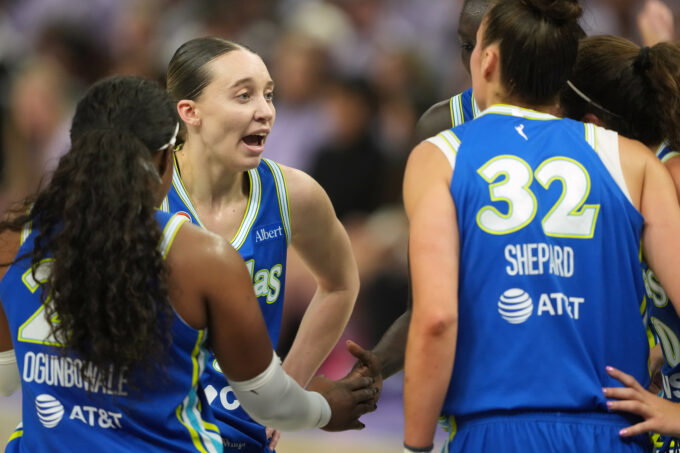
They have signed a $2.2 billion television contract. Their audiences have grown by more than 36%. Players such as Paige Bueckers, Caitlin Clark, and Angel Reese are driving up viewership. They are enjoying record numbers of interactions and followers on social media. The league is expanding with three new teams in Cleveland, Detroit, and Philadelphia. The value of the franchises is rising steadily.
Everything is going up, except for one thing: salaries. Players’ salaries remain stagnant at less than 10% of the league’s revenue.
Media Bias Distorts the WNBA Salary Gap
One of the major obstacles preventing the debate on WNBA salaries from progressing normally is its unnecessary politicization.
What should be a discussion about economic justice and business sustainability is often presented on social media or in polarized media outlets as an ideological whim or an “excessive feminist demand.”
But what the players are asking for is not a utopian leap, nor a salary equal to that of their NBA counterparts. What they are demanding is that, if they have actively contributed to increasing the value of the product through record audiences, media expansion, and growth in ticketing and merchandise, the distribution ratio should be adjusted to reflect this new context.
This is not ideology. It is business. It is investment logic: if investors ran the league at a loss for years, hoping to make it profitable, then once that profitability arrives, they should fairly reward those who made it possible with proportional gains.
The current situation creates absurd contradictions. Many players are forced to play in foreign leagues during the offseason to supplement their salaries, putting their health, rest, and physical preparation at risk. In what other established professional sport does this happen?
And yet, when these same salary movements have occurred in the NBA, with players demanding raises proportional to league revenues, no one has labeled it ideological. On the contrary, commentators and analysts have defended it as a legitimate expression of the free market. Some even argue that the 50/50 split is unfair to players. Why, then, when the protagonists are women, does the discourse change so radically?
This bias is not accidental. There is a cultural reflex that associates women’s struggles in sports with a political cause, rather than a valid structural approach. But the problem is not that the players are “asking for too much”; the problem is that part of the public — and the media — are not willing to listen with the same neutrality when the voice comes from them.
The Petition, in the Words of the Players Themselves
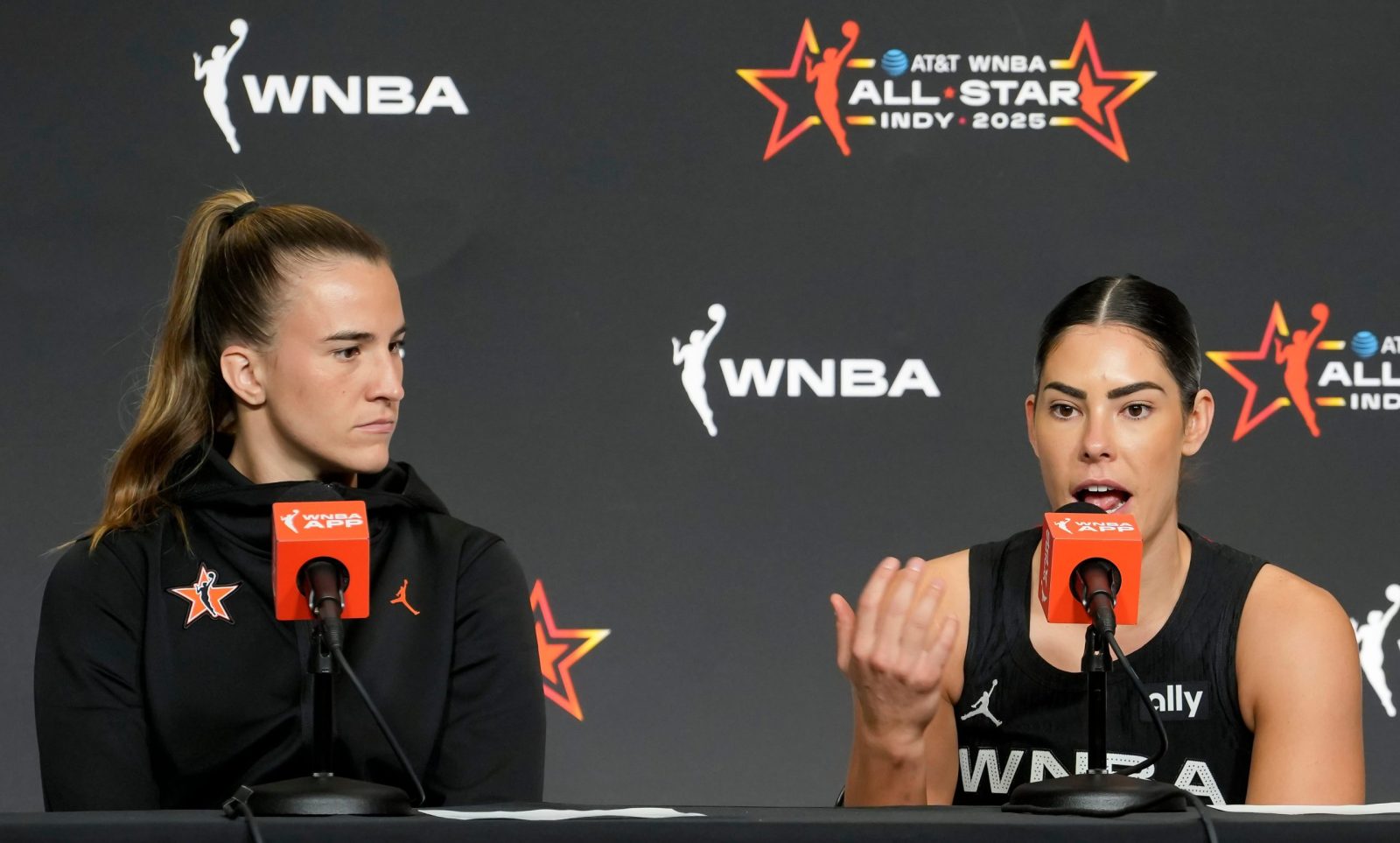
Las Vegas Aces star Kelsey Plum said on “The Residency Podcast” last year, “We’re not asking to be paid the same as men. We’re asking to be paid the same percentage of shared revenue.”
Another player who also spoke out on the matter was the president of the Women’s National Basketball Players’ Association. Nneka Ogwumike told The Athletic, “We want to be able to have that fair share moving forward, especially as we see all of the investment going in, and we want to be able to have our salaries be reflected in a structure that makes sense for us.”
This was reflected in the clear protest at the All-Star Game, as all the players jumped onto the court for warm-ups wearing T-shirts that read: “Pay us what you owe us.”
They are not asking for millions. They are asking for respect.











Leave a comment